Table of Contents
Key Takeaways
- Recruiters spend an average of 7 seconds scanning a LinkedIn profile before deciding to engage
- Your headline is the most valuable real estate and should include recruiter-search keywords
- The About section should tell a compelling professional story, not just list qualifications
- Recommendations from colleagues significantly boost credibility and trust
- Consistent content engagement keeps your profile visible in recruiter search results
How Recruiters Read LinkedIn Profiles
LinkedIn is the primary tool for recruiters in 2026. Over 90% of recruiters use the platform to source candidates, and they spend an average of 7 seconds scanning a profile before deciding to engage. In those seconds, they look for relevance to their open role, evidence of key skills, and signs of professional activity.
Understanding this scanning behavior changes how you structure your profile. Recruiters start at the top and scan downward. They read your headline first, then your About section, then your most recent experience. Every section must signal relevance immediately.
The difference between a profile that gets found and one that gets ignored is often just a few keyword placements. Recruiters use Boolean search to find candidates. If your profile lacks specific terms, you simply do not exist in their results.
The key is to think like a recruiter. What terms would someone use to find someone with your skills? What job titles are you targeting? What industry keywords matter most?
The Headline: Your Most Valuable Real Estate
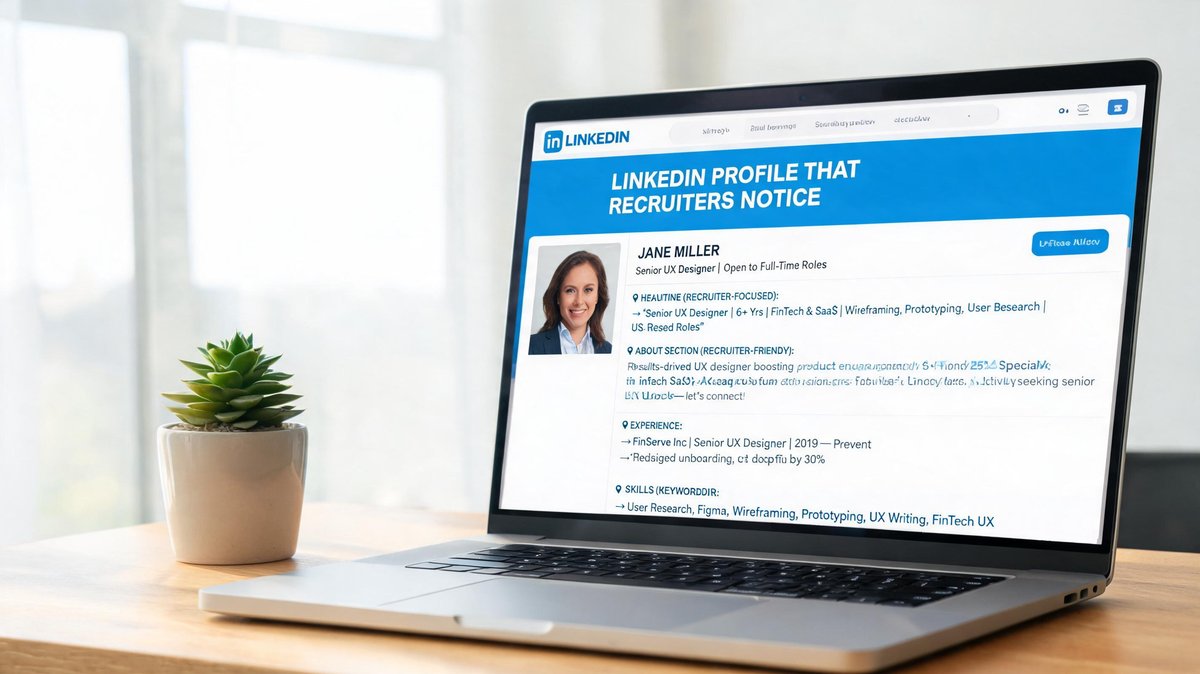
Your LinkedIn headline appears next to your name in every search result, connection request, and comment. It is the single most visible piece of text on your profile. Despite this, most professionals use their default headline: their current job title at their current company. This is a missed opportunity.
An effective headline goes beyond your job title to include the value you provide. Instead of "Software Engineer at ABC Corp," try "Software Engineer | React and Node.js Specialist | Building Scalable Web Applications." This tells a recruiter what you do and what problems you solve.
Include 2-3 keyword phrases that describe your expertise and target roles. Use pipes or bullets to separate them. Keep it under 220 characters so it displays fully on mobile. Update your headline every 3-6 months.
Writing an About Section That Tells Your Story
The About section is where you move from a list of qualifications to a compelling professional narrative. Recruiters read this section to understand not just what you have done, but who you are. A well-written About section answers: What do you do? Who do you help? What makes you different?
Structure your About section in 3-5 short paragraphs. Start with your current role and what you are passionate about. Follow with your key achievements and impact. End with what you are looking for next. Use first-person voice. Write conversationally but professionally.
Do not make the About section a resume rewrite. Focus on themes, motivations, and the big picture of your career. Recruiters already have your experience section for details. The About section is your chance to make them care about your story.
Optimizing Your Experience Section
The experience section should not be a job description. Every bullet point should describe an accomplishment, not a responsibility. Start each bullet with a strong action verb. Include numbers and percentages to demonstrate impact. Use the formula: Action plus Context plus Result.
For each role, include 3-5 bullet points highlighting your most significant contributions. Focus on outcomes relevant to the roles you want next, not just the role you currently have. If targeting a senior position, emphasize leadership and strategic thinking.
Use industry-standard keywords throughout your experience section. These keywords power recruiter search results. Think about what terms a recruiter would type into LinkedIn search to find someone like you.
Content Engagement and Recommendations
An optimized profile is the foundation, but active engagement keeps you visible. Spend 15 minutes daily on LinkedIn engaging with content in your field. Comment thoughtfully on posts from industry leaders. Share articles with your own insights.
Recommendations are one of the most underutilized trust signals. A profile with 3-5 recommendations from former managers or colleagues is significantly more credible than one without. Request recommendations from people who can speak to specific skills.
Consistency is the secret to LinkedIn success. A profile optimized once and never touched gradually disappears from search results. A profile consistently updated and engaged continues to attract opportunities month after month.
Frequently Asked Questions
Common concerns about networking & personal branding
Should I include a profile photo on LinkedIn?
Yes, profiles with professional headshots receive 14 times more profile views. Use a high-resolution photo with neutral background and professional attire.
How long should my About section be?
Aim for 3-5 short paragraphs totaling 200-400 words. Write enough to tell your story but keep it skimmable.
How often should I update my LinkedIn profile?
Review and update your profile every 3-4 months. Update your headline if your focus changes. Publish or share content weekly.
Is the Open to Work feature effective?
Use it strategically. The setting visible only to recruiters is safer than the public green banner, which can signal desperation to some hiring managers.
Related Articles
Your Next Step
Your LinkedIn profile is your digital handshake. Spend one hour this week implementing the headline, About, and experience section changes described above. Track your profile views over the next 30 days.
If this article helped you, explore our related resources linked below to continue building your career toolkit. Each article builds on the same practical, evidence-based approach to career development.